

Asad Raza
Thigmotaxis (the rat show)
September 19- December 12, 2026
Opening Reception & Conversation with Ajay Kurian: September 19, 2026, 6-9pm
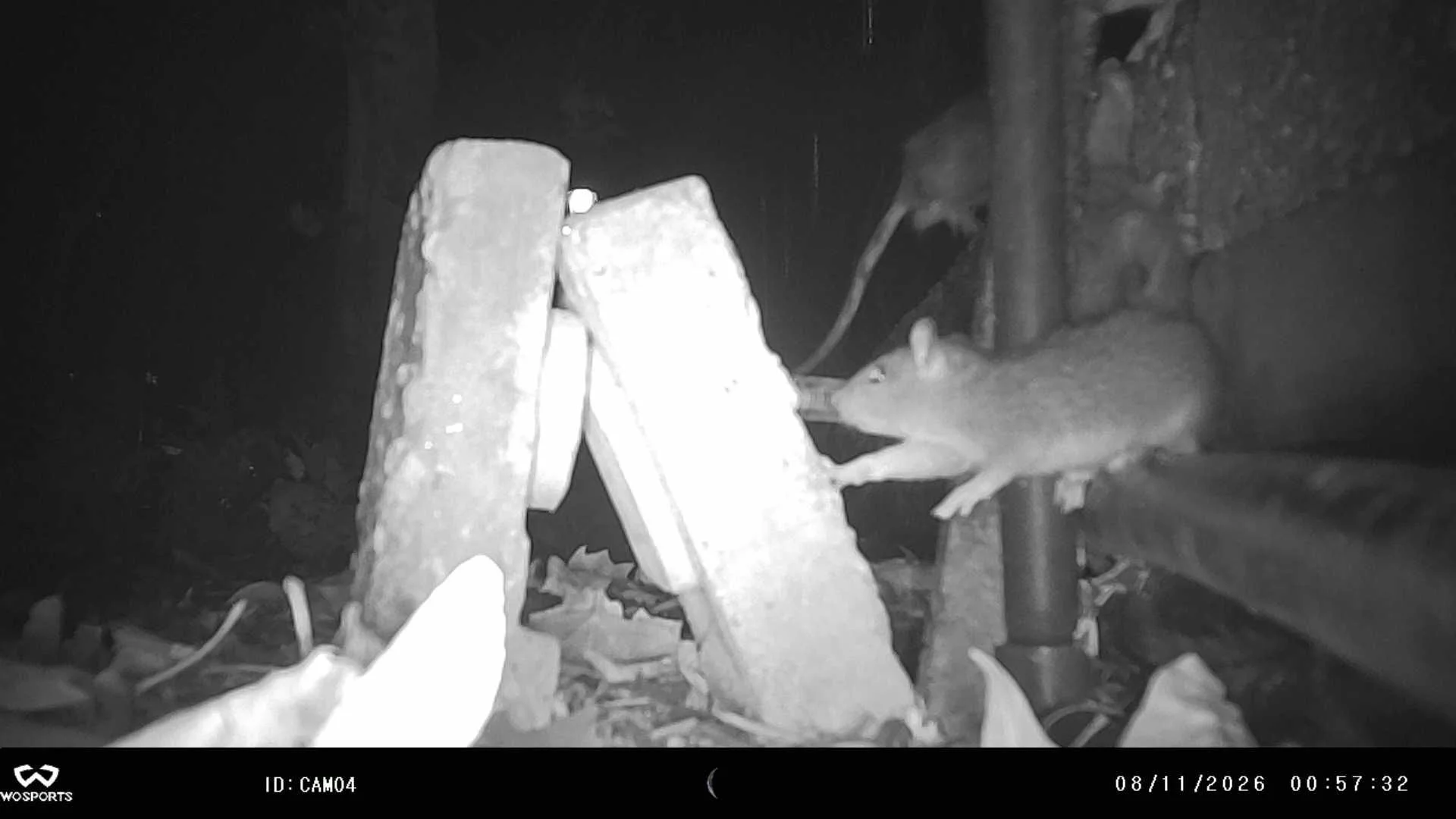
times is pleased to present Asad Raza: Thigmotaxis (the rat show). The exhibition will feature a new series of works developed specifically for the preferences of Rattus norvegicus: its instinct to move along walls and seek contact with surfaces—a behavior known as thigmotaxis. During the summer of 2026, Raza and a team of artists placed the works near various rat habitats across the city. Working at night, the team visited city streets, garbage enclosures, parks, medians, bridges, and brownstones to install the works where New York City rats can visit them. The landscape of the city is not a rehearsal space: the rats who live there are the work’s first audience, exploring it on their own terms.
Beginning in September 2026, times will present the works within the gallery, alongside video documenting some of the nightly encounters, and a wall-mounted sculpture meant for humans to experience the sensation of thigmotaxis. As the organization’s inaugural large-scale commission, Thigmotaxis (the rat show) exemplifies times’ commitment to work that moves between contexts, disciplines, and species: it is an ode to New York City’s most ubiquitous non-human residents. The resulting exhibition brings rats to light as curious, playful, and social creatures that both share our world, and act as another energetic and neural layer of it.
For Thigmotaxis (the rat show), Raza worked in consultation with animal behaviorist Michael Parsons to design structures in consonance with rats’ ways of perceiving. Using materials familiar to the rats including concrete, timber, and canvas, Raza constructed the works with architects Mara Jovanovic and Zaynab Eltaib of MIT, advised by Jaffer Kolb. The New York City team installing the sculptures included Raza and artists Devyn Gallindo, Kunning Huang, and Jared Packard. For research on active rat habitats, the team consulted Kenny “The Rat Daddy” Bollwerk.
Water, soil, wind, light, bodies, plants, and both human and nonhuman forms of labor are not merely materials in Raza’s work; they are collaborators. For the inaugural Medina Triennial (June 6–September 7, 2026), Raza’s Reflection reroutes water from the Erie Canal into the gallery space. At Kunsthal Gent (May 29–Aug 30, 2026), he transformed the former church into an active tennis court. Raza will present a new commission at E-WERK Luckenwalde (Sep 12, 2026–Apr 24, 2027), and in November, a new book, Asad Raza: Abcedarium (ed. Claudia Rankine, co-pub. by KW, Mousse, and Podere Trafonti) offers the first in-depth portrait of his practice.
Asad Raza (b. 1974, Buffalo, NY) is a Berlin-based artist known for creating living situations rather than fixed objects. Moving between installation, film, writing, and collective action, his practice explores how we inhabit ecological, social, and atmospheric systems. Soil, wind, water, light, plants, and bodies recur as collaborators—materials he hosts, listens to, and cares for. Working with scientists, gardeners, musicians, and others, Raza positions the artist as a convener rather than a sole author. His projects have been commissioned by institutions including Mori Art Museum, the Whitney Museum, the Venice Biennale, Gropius Bau, Serpentine Galleries, Guggenheim Bilbao, and Kaldor Public Art Projects.