

Liv Schulman
June 2026
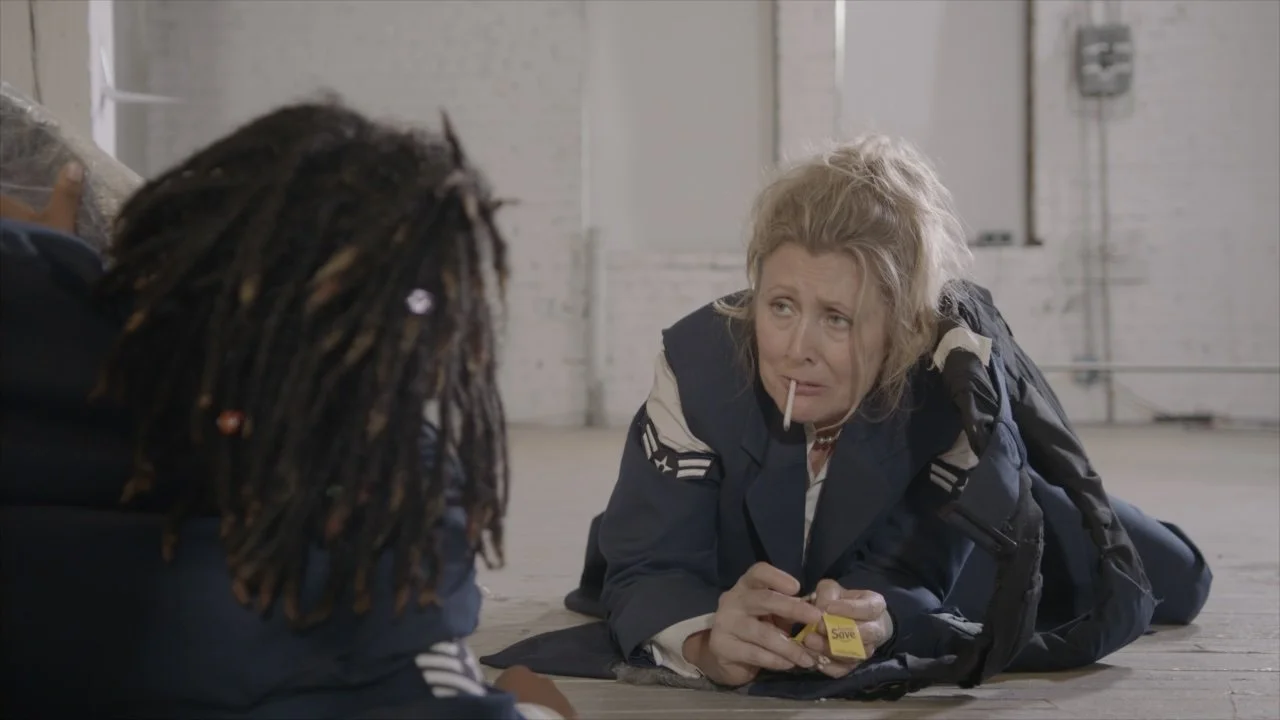
It was only in the mid-20th century that economics repositioned itself alongside the so-called “hard” sciences, Physics, Chemistry, and Biology, distancing itself from adjacent fields like Sociology, Psychology, and Anthropology. This shift leaned heavily on statistics, quantification, and the authority of empirical evidence. With the establishment of the Nobel Memorial Prize in Economic Sciences, economics secured its place inside systems of governance and decision making. But proximity to power has a way of softening the edges of objectivity. The line between observing and directing begins to blur.
Liv Schulman’s film New Inflation stays inside that blur. It approaches economics less as a system to understand than one to live through. Drawing from her experience of Argentina’s volatile economy following the early 2000s financial crisis, Schulman treats inflation as both structure and atmosphere. As she puts it, it shapes daily life at every level, less a condition than a constant, and at times, a kind of shared madness.
Structured as a five-part play, New Inflation follows five symbolic figures, Myneeds, Rockbottom, Flaw, Wrong, and Best Intentions, circling the problem of value without ever landing on it. Their conversations stall, loop, and contradict themselves. Language slips. Words misfire. Meaning does not disappear so much as it refuses to hold still. Value bends and slides, but remains the skein.
Seen from New York, the distance collapses quickly. The art world here runs on its own version of inflation, speculative, loosely agreed upon, and rarely examined too closely. Value is asserted, circulated, and reinforced through repetition. Prices move faster than understanding. What holds is not clarity but consensus, however thin. Schulman’s characters, in their strained attempts to define worth, start to feel less symbolic and more familiar.
This instability carries through the work. Economic behavior begins to resemble the indeterminacy of Quantum Physics, with value shifting depending on who is looking and when. Throughout, these slippages are edged with a quiet erotic charge, where desire, language, and exchange begin to overlap.
New Inflation does not resolve these contradictions. It stays close to how they are lived. What comes forward are the personal and affective responses to instability, how it settles into the body, distorts perception, and reorganizes desire. Economics is not presented as an abstract system but as something felt, absorbed, and carried, unevenly, day to day.
The New Inflation (2021/2022) was created at Bemis Center for Contemporary Art and produced by Sylvie Fortin. The cast includes Brianna White, Ash Elizabeth Smith, Ronette Lee, Katlin Langstom and Will Timmins. The film has a running time of 63 minutes.
Liv Schulman is an artist, writer and filmmaker. Born in 1985, Liv Schulman grew up in Buenos Aires. Fascinated by television, the arrival of cable in 1990 and the financial crash of 2001 are among the most striking moments of her life. A graduate of the École nationale supérieure d’arts de Paris-Cergy, she’s been living in France and Buenos Aires intermittently since 2015. Liv Schulman’s work takes the form of filmed fictions, TV series, readings-performances and novel writing. The narratives at the core of her work deal with the role of subjectivity in the political space and the difficulty of giving it credit. In this way, a real telenovela is shown on television as if in a museum. In her approach, to create means directly experiencing an environment, a system, a subject.
Her work has been exhibited at the Villa Vassilieff in Paris, the CAC La Galerie in Noisy-le-Sec, the Centre Pompidou in Paris, the Crac Alsace, the Steirischer Herbst festival in Austria, the Fondation Ricard in Paris, the SMK in Copenhagen, the Museo de Arte Moderno in Buenos Aires, the Museo Reina Sofia in Madrid, and the Bemis Center for Contemporary Arts in Nebraska. She has benefited from the ADAGP grant, the patronage of the Fondation des Artistes, the DAAD residency program in Germany, and was awarded the Prix Ricard in 2018. She is represented by Piedras Galeria in Buenos Aires and anne barrault gallery in Paris.